What Are Some Cheap Ways to Block Heat From Windows in Deer Park?
A few inexpensive changes can take the edge off a hot room, and knowing which windows to start with saves you money.
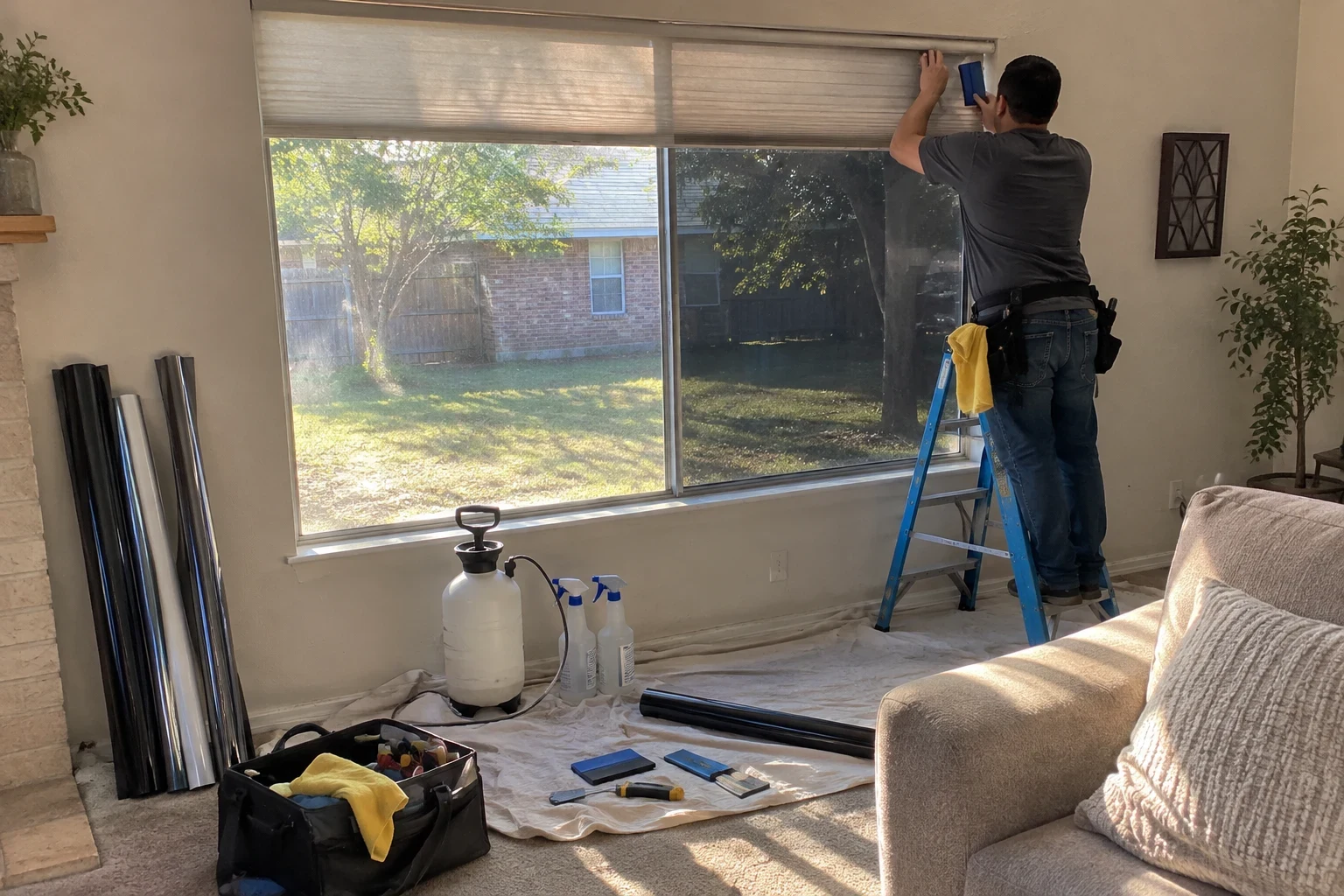
What are some cheap ways to block heat from windows?
The cheapest ways to block window heat are closing light-colored blinds or curtains in the afternoon, adding exterior solar screens or awnings on west and south windows, sealing drafts, and shading glass with plants. For lasting heat rejection that keeps your view, professionally installed window film is the next step. Free quote: (281) 400-5474
Which windows are letting the most heat in?
Start by finding the worst offenders, because fixing two hot windows often does more than treating ten mild ones. West-facing glass takes the hardest hit in the late afternoon, when the sun is low and the outside air is already at its hottest. South-facing windows run a close second, especially large sliding doors and picture windows.
A simple test works well. Around four in the afternoon on a sunny day, hold your palm a few inches from each window. The glass that feels like an oven door is where your money should go first.
Older single-pane windows and aluminum frames pass heat more readily than newer double-pane units, so those deserve attention too. In a Deer Park summer that runs long and humid, these few windows can keep a room warm well into the evening.
Low-cost fixes you can try this weekend
None of these need a contractor, and most cost less than one month of a high cooling bill. They work best when you combine two or more on the same window.
- Close blinds and curtains before the sun hits the glass, not after the room is already hot. Light colors or white backings bounce more heat back out than dark fabric does.
- Hang thermal or blackout curtains on the hottest windows and let them reach the floor and overlap the frame on both sides, so warm air has fewer gaps to spill through.
- Add exterior solar screens or a fabric awning on west windows. Stopping sunlight before it reaches the glass is far more effective than catching it inside.
- Seal gaps around frames with caulk and weatherstripping. It will not stop sunlight, but it keeps hot, humid outside air from leaking in.
- Plant shrubs or a small tree on the west side for long-term shade, keeping roots a safe distance from the foundation.
- Run a ceiling fan counterclockwise in rooms with big windows so you feel cooler at a higher thermostat setting.
Does DIY window film actually work?
Store-bought film can help on a small single-pane window, and it is cheaper up front. The trouble usually shows up in the details. Most DIY kits are thin dyed or basic reflective films with modest heat rejection, and they can fade or turn purple after a few hot summers.
Installation is where most kits fall short. Dust trapped under the film becomes a permanent speck, a rushed squeegee leaves bubbles and creases, and edges trimmed tight against the gasket tend to lift and peel. Some darker or highly reflective films can also add heat stress to certain double-pane windows, so it is worth checking what your glass can handle before you buy.
If you want to try it, pick a small, low-visibility window first, clean the glass with a razor scraper and lint-free cloth, and leave a hairline gap at the edges so the film can sit flat as it cures.
When is professional window film worth it?
Shades and curtains block heat by blocking the view. If you want the room cooler and still want to see your yard, window film is the option that does both. Ceramic film in particular rejects a large share of solar heat and UV without making the room dark or giving the glass a mirror look, which suits most homes.
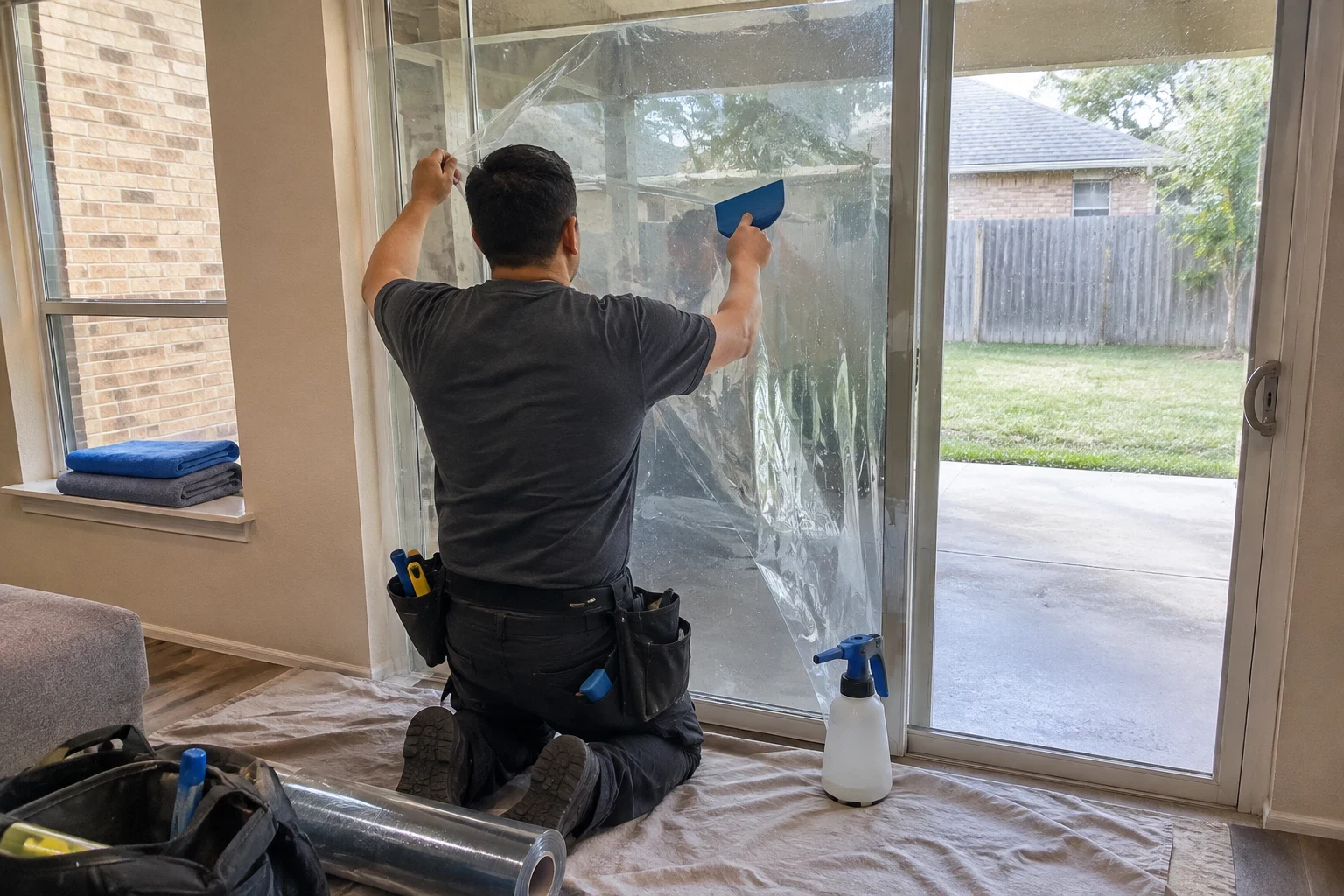
What decides how long film lasts is mostly invisible once it is on the glass. We deep-clean every pane, including the corners where grit collects, cut each piece to leave a clean, even edge gap, and push out the mounting solution with overlapping strokes so nothing is trapped underneath. We also check your window type before recommending a film, so the product fits the glass instead of fighting it.
For many homeowners the right plan is a mix: film on the three or four windows that cook the house, and simple shades everywhere else. That keeps the cost down while fixing the rooms you actually feel.
- West and south windows that heat a room every afternoon
- Living rooms where you want the view but not the glare
- Furniture, floors or artwork fading near sunny glass
- Rooms where curtains stay shut all summer just to cope
More questions about blocking window heat
Something not covered here? (281) 400-5474
Do blackout curtains really keep a room cooler?
Yes, they help, especially with a light-colored backing and a snug fit around the frame. The heat still reaches the glass, though, so the space between the curtain and window can get very warm.
Will window film affect my window warranty?
Some window makers set conditions on which films can be applied to their glass. We look at your windows and point you to a film that suits them before any work begins.
Can reflected sunlight from windows damage artificial turf or siding?
It can. Some energy-efficient windows bounce concentrated sunlight that warps vinyl siding or melts synthetic turf, and turf protection window film is made to soften that reflection.
Will window tint make my rooms dark?
Not necessarily. Many ceramic and non-reflective films are light enough that rooms keep their daylight while losing much of the heat and glare.
Find out which windows are worth treating
Tell us which rooms run hot and when. We will talk through cheaper fixes, explain where film would make a real difference, and give you a free quote for just the windows that need it.