ServicesCeramic Window Film
Ceramic Window Film in Deer Park
Ceramic film keeps the sun's heat outside while your windows stay clear and your rooms stay bright. We prep every pane carefully, trim the edges clean and leave the film to cure properly, so it stays flat, clear and bubble-free for years.
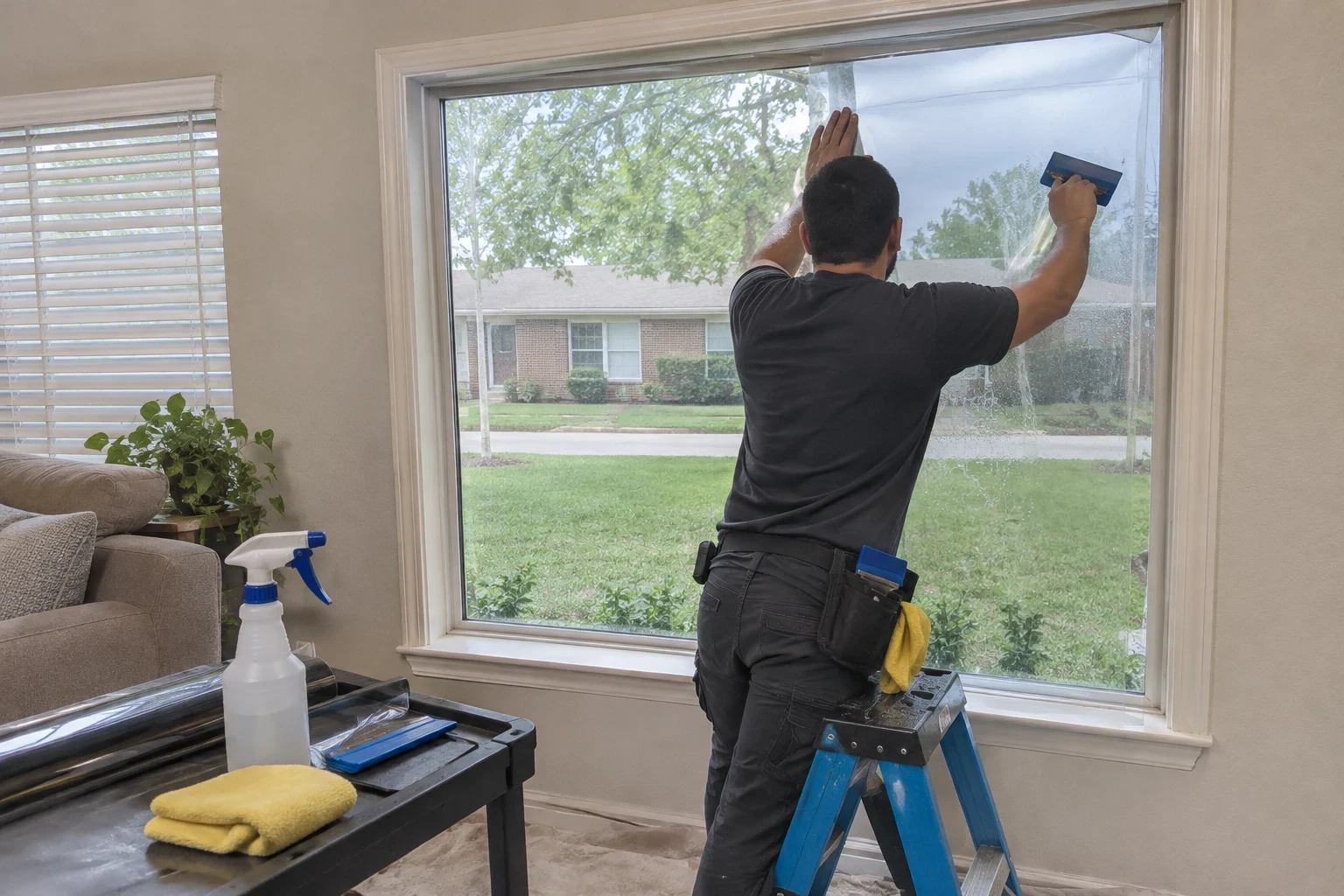
Cooler rooms without the dark, mirrored look
Ceramic window film uses tiny ceramic particles to block infrared light, the part of sunlight you feel as heat. Unlike older dyed or metal films, it can stay light in shade and still take a real bite out of solar heat. It also blocks most UV rays, which helps slow fading on floors, furniture and artwork.
Because there is no metal in it, ceramic film won't interfere with cell phones, Wi-Fi or smart home devices, and it won't corrode at the edges in humid air. That matters on the Gulf Coast, where long, sticky summers are hard on cheaper films.
It is the right call when you want heat rejection and glare reduction but don't want your house to look tinted from the street. If daytime privacy is your main goal, our privacy window tinting page covers darker and one-way options.
What our ceramic film installation includes
Glass check before we quote
We look at each window's glass type, age and seals. Some dual-pane and large fixed panes need a specific film to avoid thermal stress, and we match the film to the glass.
Sample viewing in your rooms
We bring samples so you can hold them up to your own windows at different times of day. You see the actual shade and clarity before you choose.
Deep glass prep
Every pane is scraped and washed to remove paint specks, hard water spots and dust. Most bubbles and specks people notice later start with skipped prep, so we take our time here.
Precise edge trimming
We cut the film to leave a small, even gap at the frame. That gap lets the film settle without lifting, and it keeps the edge from catching dirt or peeling over time.
Furniture and floor protection
We move what needs moving, lay down drop cloths and use towels along sills. You get your rooms back clean, with the trimmings and packaging hauled away.
Signs ceramic film fits your windows
Rooms that bake every afternoon
A west or south facing room that stays hot long after the AC kicks on is a strong candidate. Ceramic film targets that radiant heat directly.
Glare on screens and the TV
If you close the blinds every time you want to watch something or work on a laptop, film can cut the glare while letting you keep the view.
Faded rugs and furniture
Lighter patches on hardwood floors or a sofa that has lost its color point to UV exposure.
You tried tint and lost your signal
Metallic films can weaken cell and Wi-Fi reception indoors. Ceramic film avoids that problem.
You want the house to look untinted
HOA rules or simple taste may call for a natural look. Light ceramic shades are hard to spot from outside.
How the day goes
- 1
Quote and film choice
We talk through your goals by phone, then measure, check the glass and show samples. You get a clear written quote before any work is scheduled.
- 2
Setting up the room
On install day we clear the sills, protect floors and furniture and start with the windows you care about most.
- 3
Cleaning and applying
Each pane is cleaned twice, then the film goes on with a slip solution and is squeegeed out from the center. We work the edges last and trim by hand for a tight, even line.
- 4
Final look and care tips
We walk the rooms with you, check every pane in good light and explain curing. Small water pockets or a slight haze can show for a few weeks while the film dries, and that is normal.
What moves the price of ceramic film
Ceramic film costs more per square foot than basic dyed film because the material does more work. Your total comes down to how much glass we cover and how easy it is to reach. We give you the number in writing before we start, so there are no surprises on the day.
- Total glass area
- More square footage means more film and more labor. Many people start with the hottest rooms and add others later.
- Film grade and shade
- Ceramic films come in several performance levels. Higher heat rejection grades cost more, and we'll tell you honestly when a mid-level film will do the job.
- Window size and access
- Tall foyer windows, transoms and stairwell glass need ladders or scaffolding and extra time to handle large sheets cleanly.
- Removing old film
- Peeling or bubbled tint has to come off, along with its adhesive, before new film can go on. That adds labor depending on how stubborn it is.
Ceramic film questions we hear often
Something not covered here? (281) 400-5474
Will ceramic film make my rooms dark?
Not unless you want it to. Ceramic film comes in light shades that look close to clear glass yet still reject a good share of heat. We show you samples on your own windows so you can judge the light for yourself.
Is it safe on dual-pane windows?
Usually yes, as long as the film is matched to the glass. Some films absorb more heat and can stress certain insulated units. We check your glass type first and pick a film suited to it.
Will it affect my phone or Wi-Fi?
No. Ceramic film has no metal layer, so it doesn't block signals the way metallic tint can. That is one of the main reasons people choose it.
How long until it looks perfect?
Most film looks good the same day, but full curing takes a few weeks, longer in cool or cloudy weather. Any light haze or tiny water pockets fade as the moisture dries out. Leave the film alone during that time and it will settle flat.
How do I clean it?
After the curing period, use a soft cloth or rubber squeegee with mild soapy water. Skip ammonia cleaners and anything abrasive. Treat it gently and the film keeps its clarity.
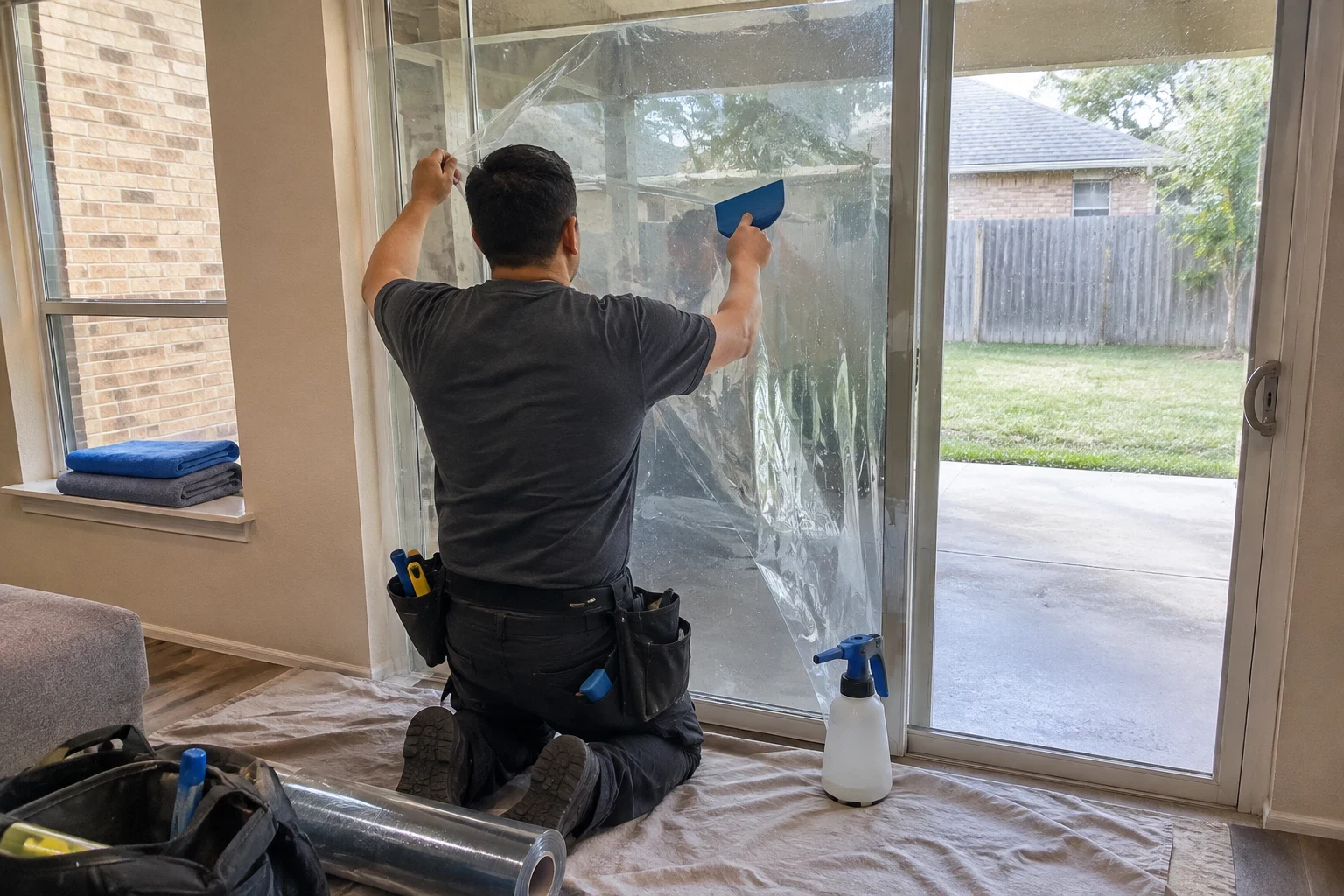
See ceramic film on your own windows
Tell us which rooms run hot or bright, and we'll bring samples, check your glass and give you a clear written number. We work in Deer Park and nearby towns like Pasadena and La Porte.