ServicesHome Window Tinting
Home Window Tinting in Deer Park
We install window film that keeps hot rooms cooler, softens glare on screens and slows the fading of floors and furniture. Every pane gets cleaned, cut and sealed by hand, so the film looks clear today and still sits flat years from now.
What home window film does for your rooms
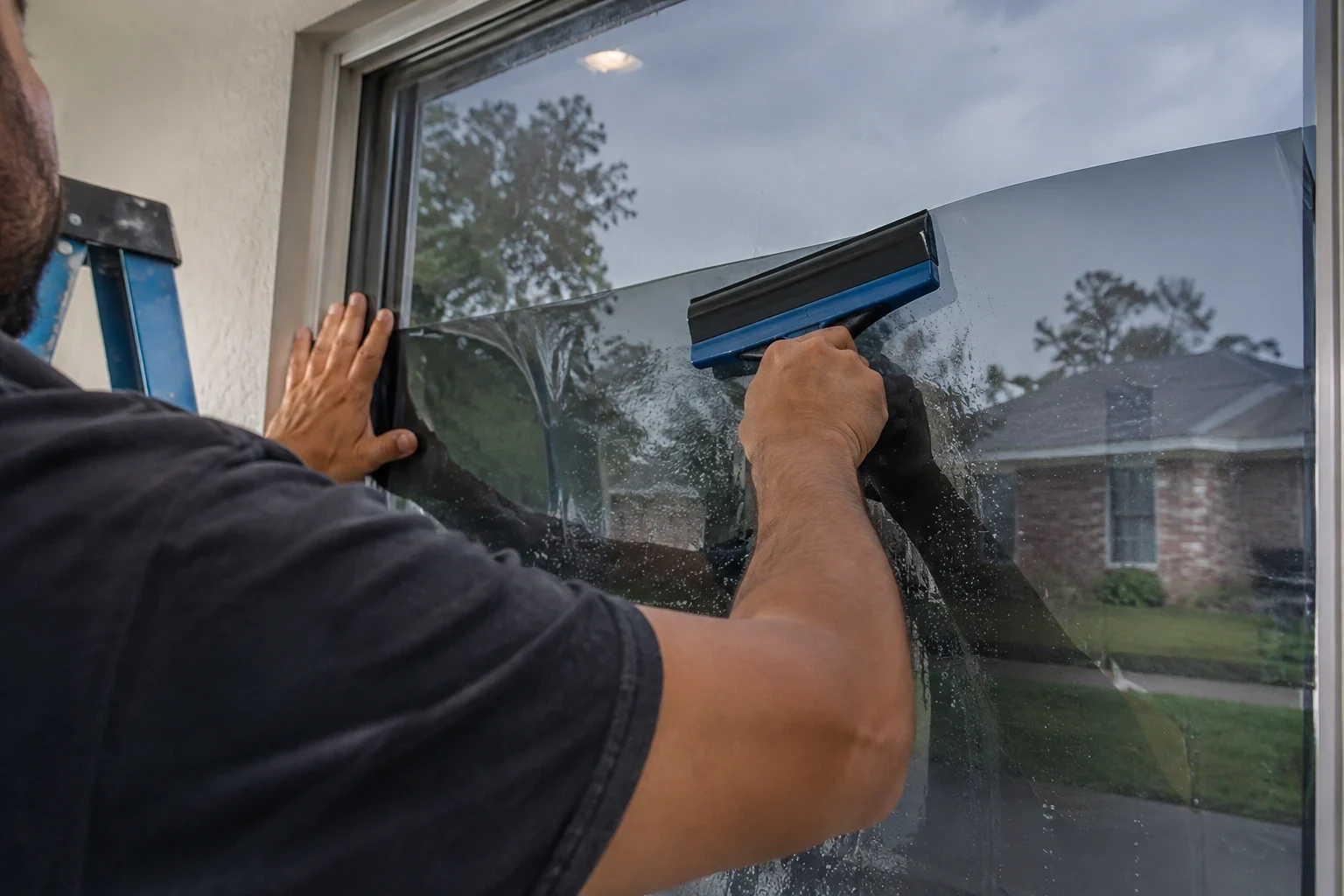
Window film is a thin, clear layer applied to the inside of your glass. Depending on the film, it rejects a large share of the sun's heat, blocks nearly all UV and cuts the glare that bounces off TVs and kitchen counters. You keep your view, and the room behind that west-facing window stops feeling like an oven by late afternoon.
Most of what decides whether tint lasts happens in small moments: how clean the glass is before the film goes on, how close the cut sits to the frame, and how firmly the water is pushed out. We take our time on those steps because they are the difference between film that peels at the corners and film you forget is there.
If heat is your main concern, ask us about ceramic window film. If you want rooms that people outside can't see into, our privacy window tinting page covers that work.
What's included in a home tinting job
- A walk-through of every window
- We look at each window with you, note which way it faces and check the glass type. Dual-pane and low-E glass need a film that's rated for them, and we tell you plainly if a window isn't a good candidate.
- Film matched to the room
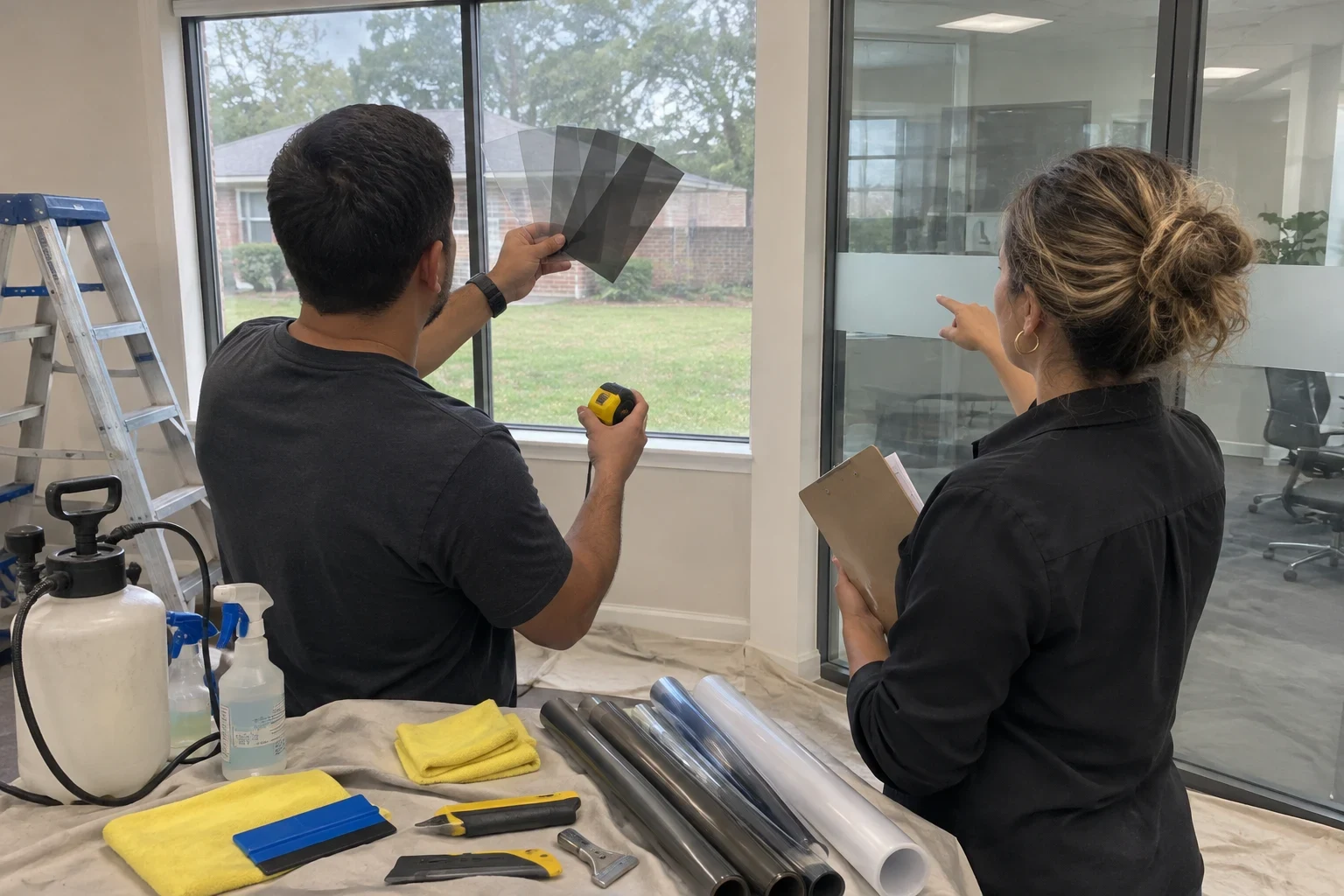
- A nursery, a home office and a sunroom don't need the same film. We'll show you samples against your own glass so you can see how dark or clear each one looks in your light.
- Deep glass prep
- We scrape and wash each pane to remove paint specks, old adhesive and fine grit. One trapped speck becomes a visible bump, so this step takes longer than most people expect.
- Hand-trimmed edges
- Film is cut on the glass with a small, even gap at the frame. That gap lets the film settle without lifting and keeps the edge from catching dirt.
- Protection and cleanup
- Drop cloths go down under every window, and we move blinds and small furniture with care. When we leave, the sills are wiped and the scraps are gone.
Signs your home could use window film
One room is always hotter
If a bedroom or living room stays warm long after the rest of the house cools down, the sun through the glass is often the reason. Heat rejection film targets that problem directly.
Faded floors and furniture
Lighter patches on hardwood, rugs or a sofa where the sun lands are UV damage. Film blocks the UV that causes most of it.
Glare on screens
Squinting at the TV or closing the blinds every afternoon to work at your desk is a common reason people call us.
Blinds closed all day
If you keep the shades down for heat or privacy, film can let you open them again and enjoy the daylight.
The AC rarely gets a break
Through a long Gulf Coast summer, sunny windows add steady heat load. Tinting the worst ones can ease how hard your system works.
How the day goes
- 1
Quote by phone, then a visit
We start with a call to talk through your rooms and goals. Then we visit, measure and give you a clear written quote with the film and windows listed.
- 2
Setting up
On install day we lay drop cloths, move what's in the way and take down blinds where needed. Most homes are finished in a single day.
- 3
Cleaning, fitting and squeegeeing
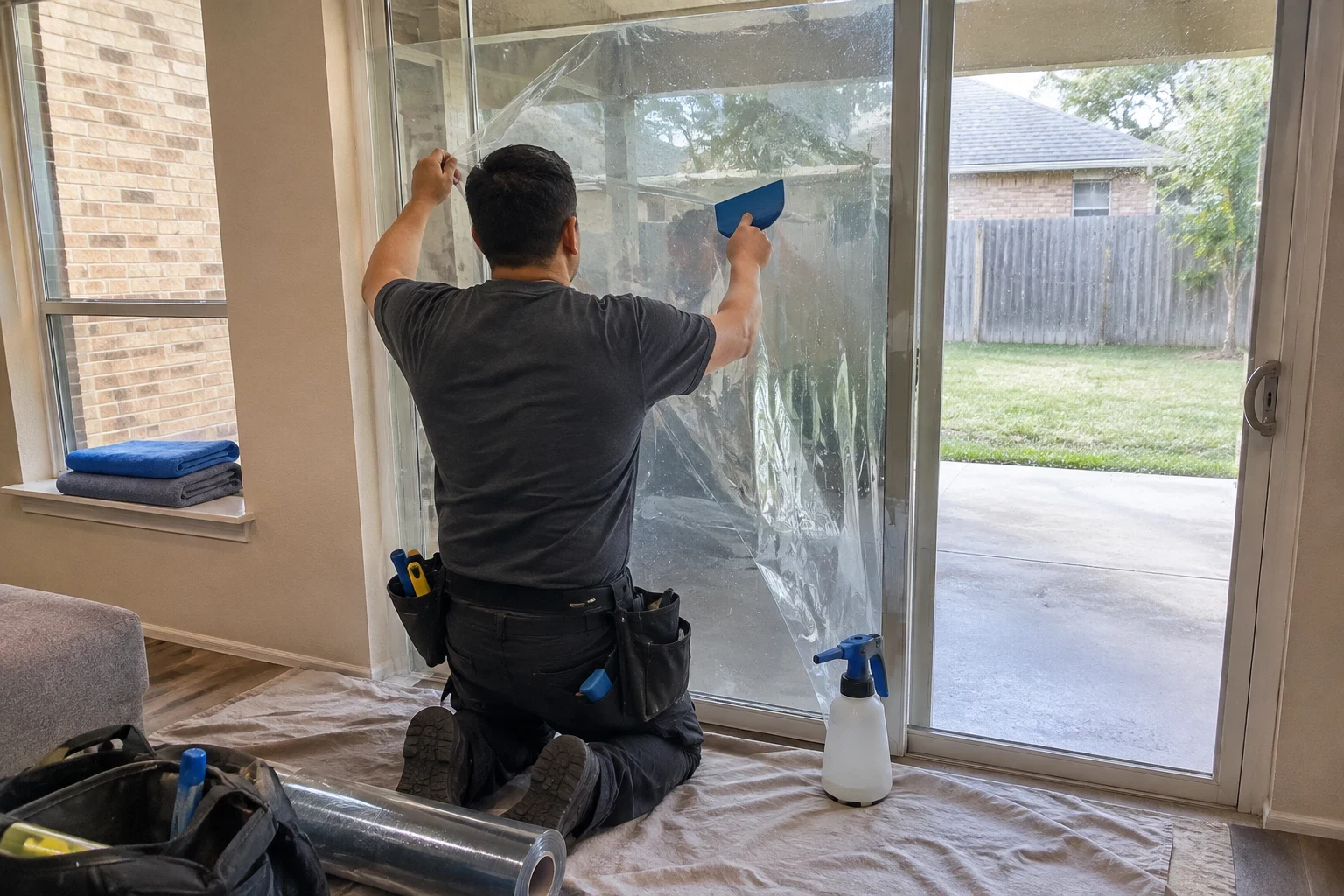
Each pane is cleaned, the film is laid on with a slip solution, and we work the water out from the center toward the edges. Then we trim the edge gap and press it down again.
- 4
A final look together
We walk through with you, check every edge in good light and explain curing. A slight haze or small water pockets for the first few weeks are normal and clear on their own as the film dries.
What affects the price of home tinting
Your quote depends on the windows themselves and the film you pick. We list each window and the film for it, so you can see exactly what you're paying for and choose to start with only the hottest rooms if you like.
- Film type
- Standard dyed films cost less than ceramic or spectrally selective films, which reject more heat while staying lighter in color.
- Number and size of panes
- More glass means more film and more labor. Large picture windows and sliding doors take extra hands and care to fit without seams.
- Access
- Second-story windows, transoms and glass above stairs need ladders or staging, which adds time.
- Removing old film
- Peeling or bubbled tint has to come off first, along with its adhesive. That cleanup can take as long as the new install.
Questions about home window tinting
Something not covered here? (281) 400-5474
Will tint make my rooms dark?
Not unless you want it to. Many modern films, especially ceramic, block a lot of heat while looking nearly clear. We'll hold samples against your windows so you can judge before deciding.
Is window film safe on dual-pane windows?
Usually yes, as long as the film is rated for that glass. Some darker or more reflective films absorb enough heat to stress certain dual-pane units, so we check your glass type and choose a compatible film.
How long until I can clean the windows?
Give the film about a month to cure before washing the inside of the glass. After that, a soft cloth and an ammonia-free cleaner keep it looking new.
Can I still see out at night?
With light and medium films, yes. With darker or mirrored films, the view can reverse at night when your lights are on, so you may still want blinds in bedrooms. We'll explain how each option behaves after dark.
Do I have to tint every window at once?
No. Plenty of homeowners start with the west and south windows that get the most sun and add others later. We can match the film so the house looks consistent.
Let's talk about your hottest rooms
Tell us which windows bother you most and we'll suggest a film that fits. We work in Deer Park and nearby towns including Pasadena, La Porte and Seabrook.