ServicesSecurity Window Film
Security Window Film in Deer Park
Security window film is a thick, clear layer applied to the inside of your glass. If the pane breaks, the film holds the pieces together and slows anyone trying to get through. We fit it carefully, edge by edge, so it stays put for years.
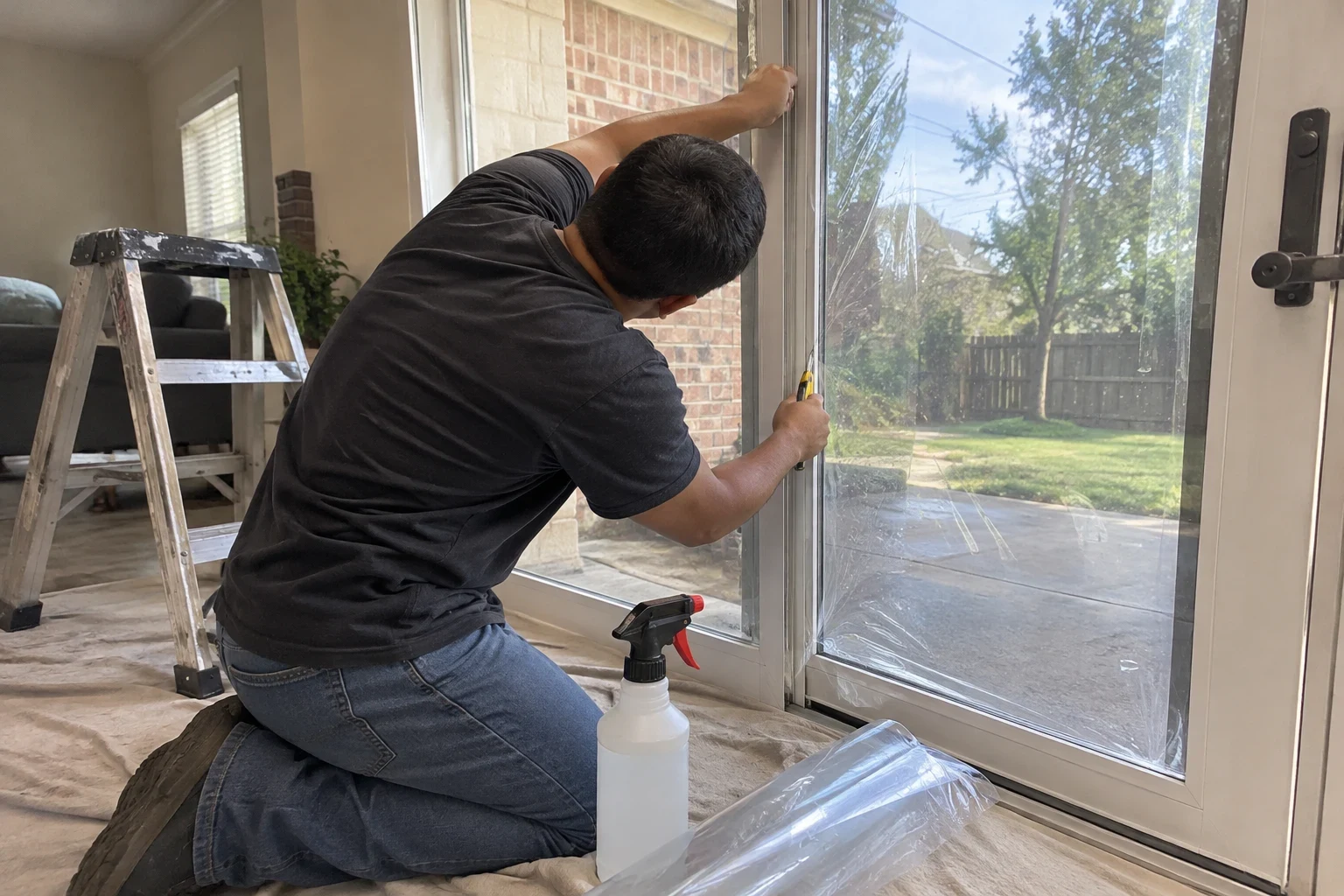
What security film does, and what it doesn't
Ordinary glass breaks into sharp pieces that fall into the room. Security film is a much thicker polyester film than standard tint, applied to the inside of the glass. When something hits the window, the glass may still crack, but the film keeps the pieces stuck together and in the frame. That means less flying glass and more time and noise for anyone trying to force their way in.
We'll be straight with you. Security film is not bulletproof and does not make a window unbreakable. It also isn't a replacement for storm shutters during hurricane season. What it does well is cut the risk of a quick smash-and-grab, protect people from broken glass, and keep a cracked pane in place until it can be replaced.
How long it lasts comes down to the install. Clean edges, the right film thickness for the glass, and a proper bond to the frame make the difference, so that's where we spend our time.
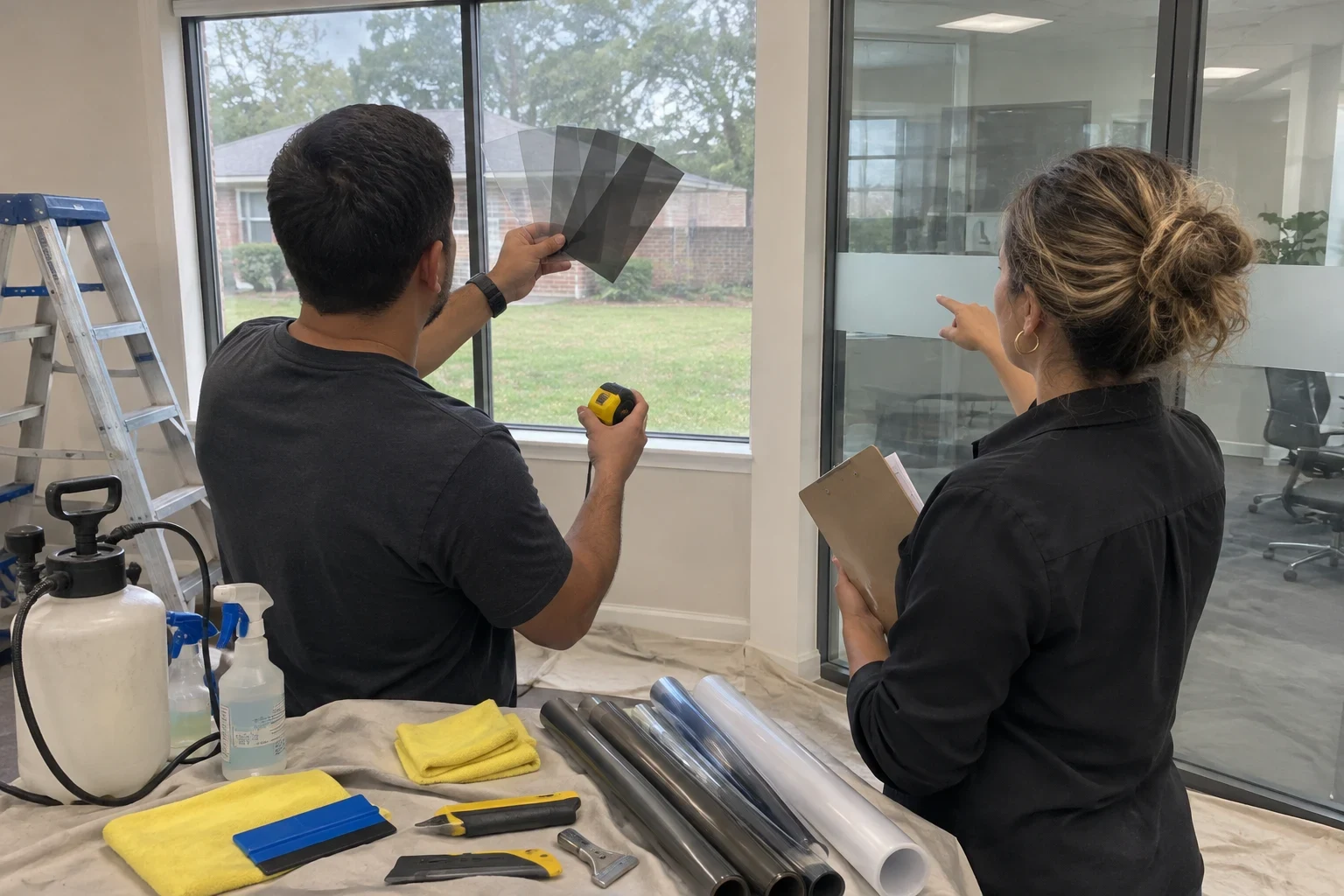
What's included when we install security film
- 01
A look at your glass first
We check whether each window is single-pane, dual-pane or tempered, and how big it is. Some film and glass combinations can stress the glass in direct sun, so we match the film to the window instead of using one product everywhere.
- 02
Film thickness matched to the job
Security films come in different thicknesses. A thinner film works for safety glazing on a patio door. A thicker one makes more sense on a ground-floor window that faces the street. We explain the trade-off so you only pay for what the window needs.
- 03
Careful glass prep
We scrape and clean every pane so no dust or specks get trapped under the film. A single speck can leave a bubble you'll notice for years.
- 04
Tight, even edges
We trim each sheet with a small, consistent gap at the frame so the film can't catch and lift when you clean the window.
- 05
Optional frame attachment
On windows where it's worth it, we can bond the film edge to the frame. That keeps the whole pane anchored instead of letting the sheet of broken glass push out in one piece.
- 06
Cleanup and care notes
We put down drop cloths, wipe down sills and take the scraps with us. You'll get simple instructions on curing time and cleaning.
Questions about Security Window Film?
Call(281) 400-5474Signs security film is worth a look
Ground-floor glass out of view
Back doors, side windows and sliders that neighbors can't see are where break-ins usually start. Film there slows entry and makes noise.
Large panes near where people sit
Big windows beside a couch, crib or dining table can drop a lot of glass if they break. Film keeps the pieces together.
Glass doors that see bumps
Patio doors and storm doors take knocks from kids, pets and furniture. Older doors may not have safety glass at all.
A past break-in or attempt
If someone has already tried a window, you probably want that opening harder to get through before you replace anything else.
Storefronts and street-facing glass
Businesses with glass doors facing the street often want to slow smash-and-grab theft. We also cover this under commercial window tinting.
How the install goes
- 1
Phone call and free quote
You tell us which windows you're thinking about and why. We'll set a time to see the glass, measure it and give you a clear quote.
- 2
Prep the room
On install day we move what needs moving near the windows, lay down drop cloths and protect your sills and floors.
- 3
Clean, apply and squeegee
Each pane is cleaned, the film goes on with a slip solution, and we squeegee out the water from the center to the edges. Thicker security film takes more force and more passes than regular tint, so we take our time.
- 4
Trim and seal the edges
We trim each sheet, check every edge with a light, and bond the film to the frame where we agreed to.
- 5
Walkthrough and curing
We go over each window with you before we leave. A little haze or small water pockets are normal at first and clear up as the film cures over the next few weeks.
What affects the cost of security film
Every quote is based on your windows, not a flat rate. We write down what each line covers so you know what you're paying for before we start.
- Film thickness
- Thicker security film costs more and takes longer to install. Not every window needs the heaviest option.
- Size and number of panes
- Large panes need bigger sheets and more care to handle. A few small windows cost less than a wall of sliders.
- Frame attachment
- Bonding the film to the frame adds material and labor. We'll tell you where it's worth it and where it isn't.
- Access and glass condition
- High windows, heavy furniture or old residue from a previous film add prep time. Removing old film is quoted separately.
Security film questions
Will security film stop someone from breaking in?
It won't stop a determined person forever, and we won't tell you it will. It makes the glass much harder and slower to get through, and it makes noise. Most break-ins depend on speed, so that delay matters.
Can I still see out clearly?
Yes. Most security film is optically clear, so your view doesn't change. If you also want privacy or heat rejection, we can talk about tinted security film or pairing it with privacy window tinting.
Does it help during hurricanes?
It can help keep a cracked pane from showering glass into the room, but it is not storm protection and isn't a substitute for shutters or impact windows. We'd rather be honest about that than oversell it.
Is it safe for dual-pane windows?
Usually, but it depends on the glass and the film. Some combinations can cause heat stress in strong sun. That's why we check each window before recommending a film.
How soon can I clean the windows?
Give the film about a month to cure before cleaning the inside. After that, use a soft cloth and a mild, ammonia-free cleaner. Avoid razor blades and scrub pads on the film.
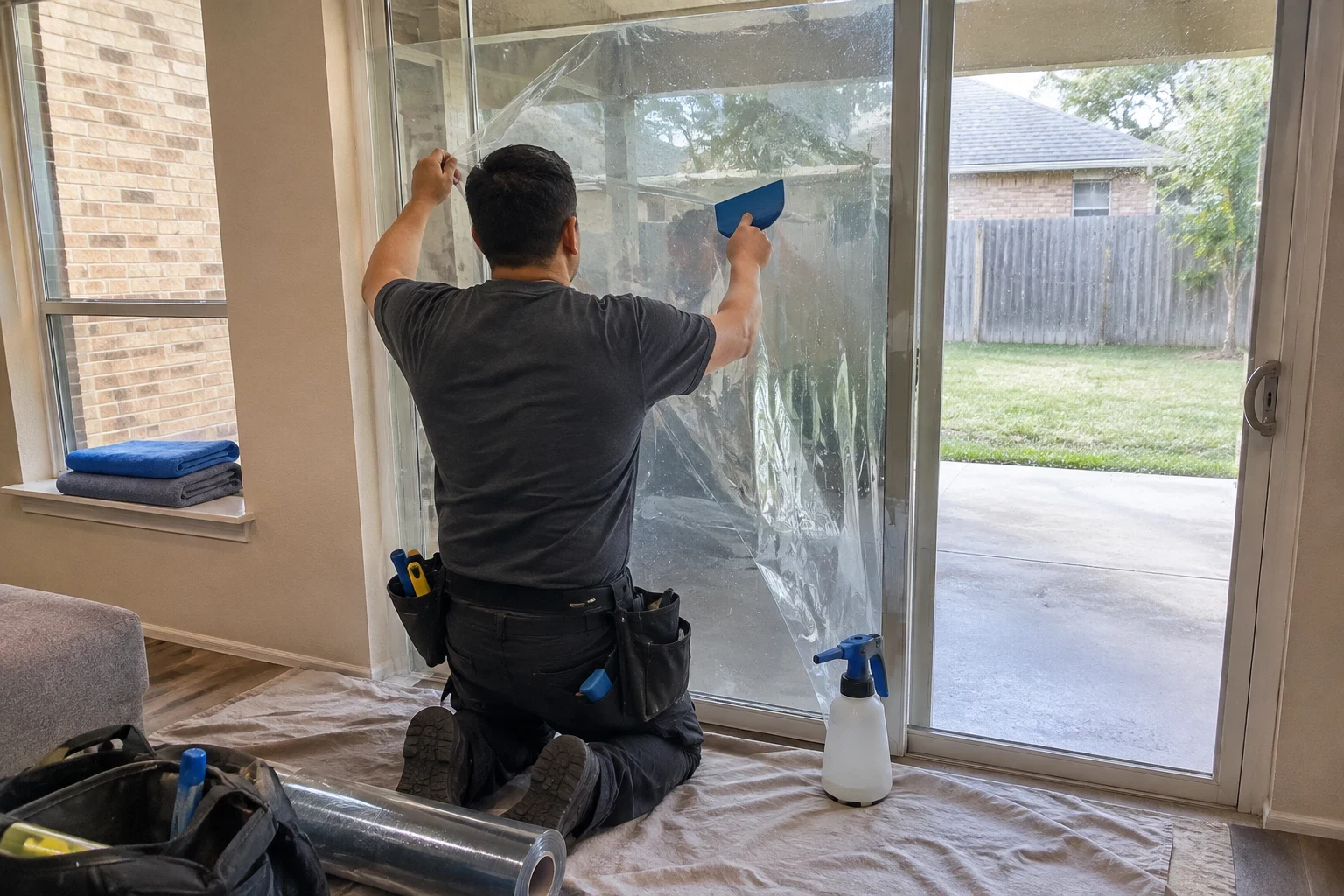
Find out which windows need it
Tell us about the doors and windows that worry you. We'll look at the glass, recommend the right film thickness and give you a clear quote.