ServicesReflective Window Film
Reflective Window Film in Deer Park
Reflective window film sends a large share of the sun's heat back outside before it warms your room. We fit it with clean, even edges and careful glass prep, so it stays clear and flat for years. That makes a cooler room and a lot less glare.
What reflective film does and when it fits
Reflective film has a thin metalized layer that works like a one-way mirror in daylight. From outside, people see a silver or bronze sheen. From inside, you still see the yard and the street, just a bit darker. It is one of the strongest options for heat rejection, which is why people choose it for the windows that turn a room into an oven every afternoon.
It is not the right call for every window. At night, with your lights on, the effect reverses and people can see in, so bedrooms and bathrooms may also need blinds or a privacy window tinting option. Some neighborhoods have rules about mirrored exteriors, and some double-pane glass needs a gentler film. If a softer look suits you better, we will say so and walk you through ceramic window film or non-reflective window film instead.
Most of how long the film lasts comes down to small installation details. That covers how clean the glass is, how the edges are cut and how the water is worked out from under the film. We put our time into those steps.
What your reflective film installation includes
- A look at your glass first
- We check whether each pane is single or double, tempered or annealed, and whether it already has a low-E coating. That decides which reflective films are safe for that glass.
- Samples on your own windows
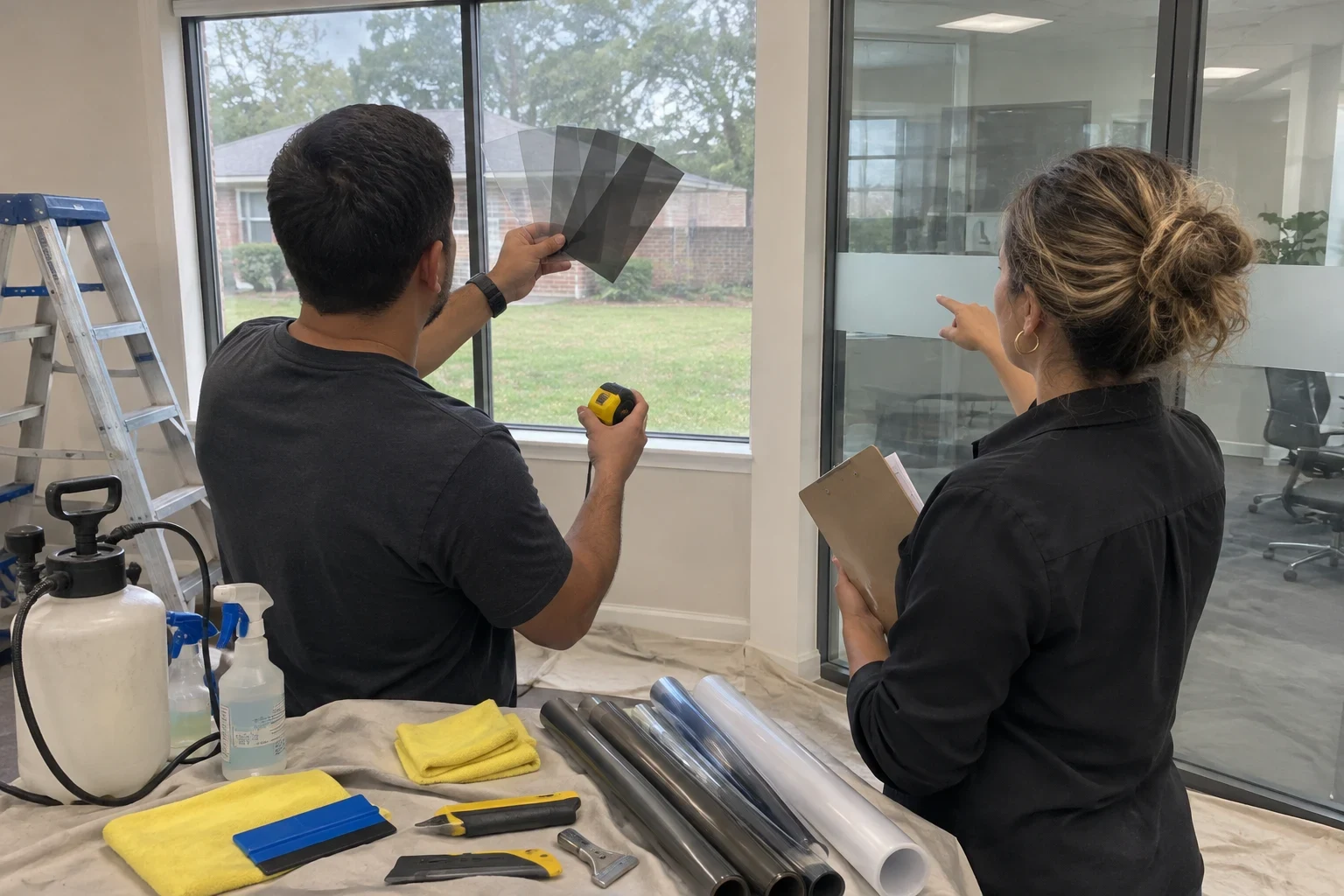
- We hold film samples up to your glass so you can see the outside sheen and the inside darkness before you choose. A swatch on a card never looks the same as film on your window in your light.
- Deep glass cleaning
- Every pane is scraped and washed, with extra attention to the corners where grit hides. A single trapped speck becomes a bump you would look at every day.
- Precise edge trimming
- We trim each sheet to leave a small, even gap at the frame. That gap lets the film settle without lifting or peeling at the edges.
- Protecting your room and cleaning up
- We cover sills and floors near the windows and move what needs moving with care. When we finish, the work area is wiped down and the trimmings leave with us.
Signs reflective film could help
One room is always hotter
If a west-facing living room or upstairs bedroom stays warm long after the rest of the house cools, the sun through that glass is usually why.
Glare on screens and floors
Bright light bouncing off TVs and work screens, or hot spots on the floor at certain hours, are what this film cuts back.
Fading furniture and rugs
Sun-bleached cushions, curtains and wood floors point to UV coming through the glass. Reflective film blocks most of it.
You want daytime privacy without blinds
If you like open blinds but not people looking in from the sidewalk during the day, the mirror effect handles that.
High cooling bills in summer
When the AC runs hard all afternoon in a Gulf Coast summer, cutting heat at the glass can ease the load and bring real energy savings.
How the job goes
- 1
Your call and free quote
Tell us which windows bother you and when. We set a time to visit, look at the glass and give you a clear quote by phone or in person.
- 2
Choosing the film
We show you a few reflective shades on your windows and explain how each one handles heat, light and the nighttime view. You pick, with no pressure to go darker than you need.
- 3
Installation day
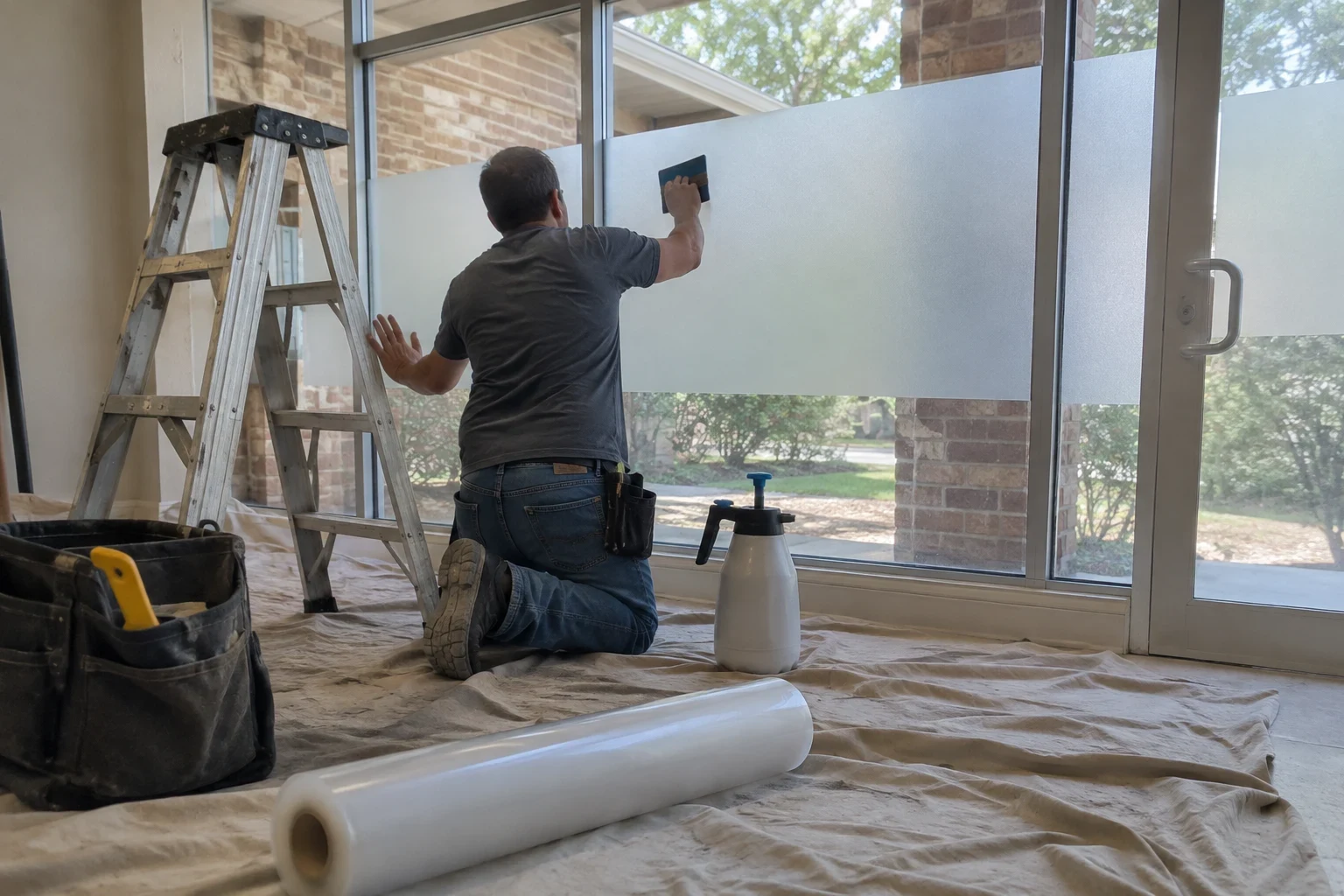
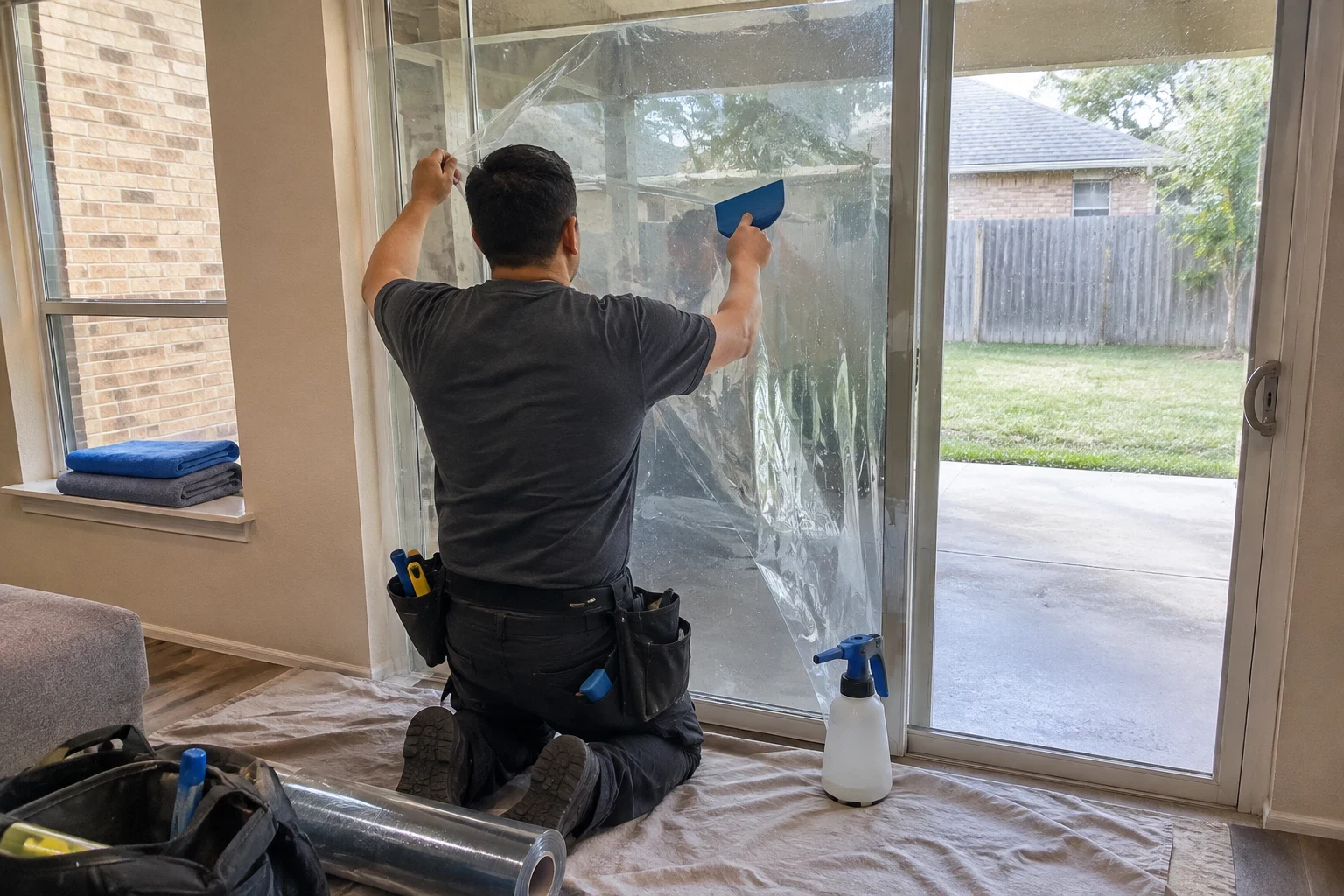
We protect the area, clean the glass, lay the film on a slip solution and squeegee the water out from the center to the edges. Then each edge is trimmed and sealed down. Most rooms take a few hours, and you can stay home while we work.
- 4
Curing and care
For the first days you may see a little haze or small water pockets. That is normal while leftover moisture dries out, and it clears faster with sun. We leave simple cleaning tips before we go.
What moves the price
Every quote is based on your windows, so we price after we have seen them. We list what is included so nothing surprises you later. These are the things that change the number most.
- Total glass area
- More square feet means more film and more labor. A few large picture windows can cost less than many small divided panes.
- Window shape and access
- French panes, arched tops and second-story glass take longer to cut and reach. Windows behind built-ins or heavy furniture add time too.
- Film grade
- Reflective films range from lighter shades to heavy mirror finishes. Some are made for double-pane glass, and those cost more than basic options.
- Old film removal
- If peeling or bubbled film is already on the glass, it has to come off cleanly first. Removal and adhesive cleanup add to the job.
Questions about reflective window film
Something not covered here? (281) 400-5474
Can people see into my house at night?
Yes, once your inside lights are brighter than the outdoors. The mirror effect depends on which side is brighter. For nighttime privacy you will still want blinds or curtains, or a privacy film on certain rooms.
Will it make my rooms too dark?
It depends on the shade you pick. Lighter reflective films keep rooms bright while still turning back a good share of heat. We show samples on your glass so you can judge it yourself before deciding.
Is it safe for my double-pane windows?
Many reflective films are fine on double-pane glass, but not all of them. Some films hold enough heat to stress the glass. We check your windows first and only suggest films suited to them.
How is this different from ceramic window film?
Reflective film uses metal to bounce heat away and has a mirror look outside. Ceramic window film blocks heat without the shine and looks closer to clear glass. Reflective often costs less for strong heat rejection, while ceramic keeps the outside of the house looking unchanged.
How do I clean the windows afterward?
Wait until the film has cured, then use a soft cloth or rubber squeegee with a mild, ammonia-free cleaner. Skip razor blades and rough pads on the filmed side. That is all it needs.
Ready for cooler afternoons?
Tell us which windows get the worst sun, and we will come look at the glass and show you samples in your own light. Your quote comes with no obligation.