ServicesTurf Protection Window Film
Turf Protection Window Film in Deer Park
If strips of your artificial grass are melting, shiny, or turning stiff, a window is likely bouncing focused sunlight onto them. We find the glass causing it and apply a film that softens the reflection, so the damage stops.
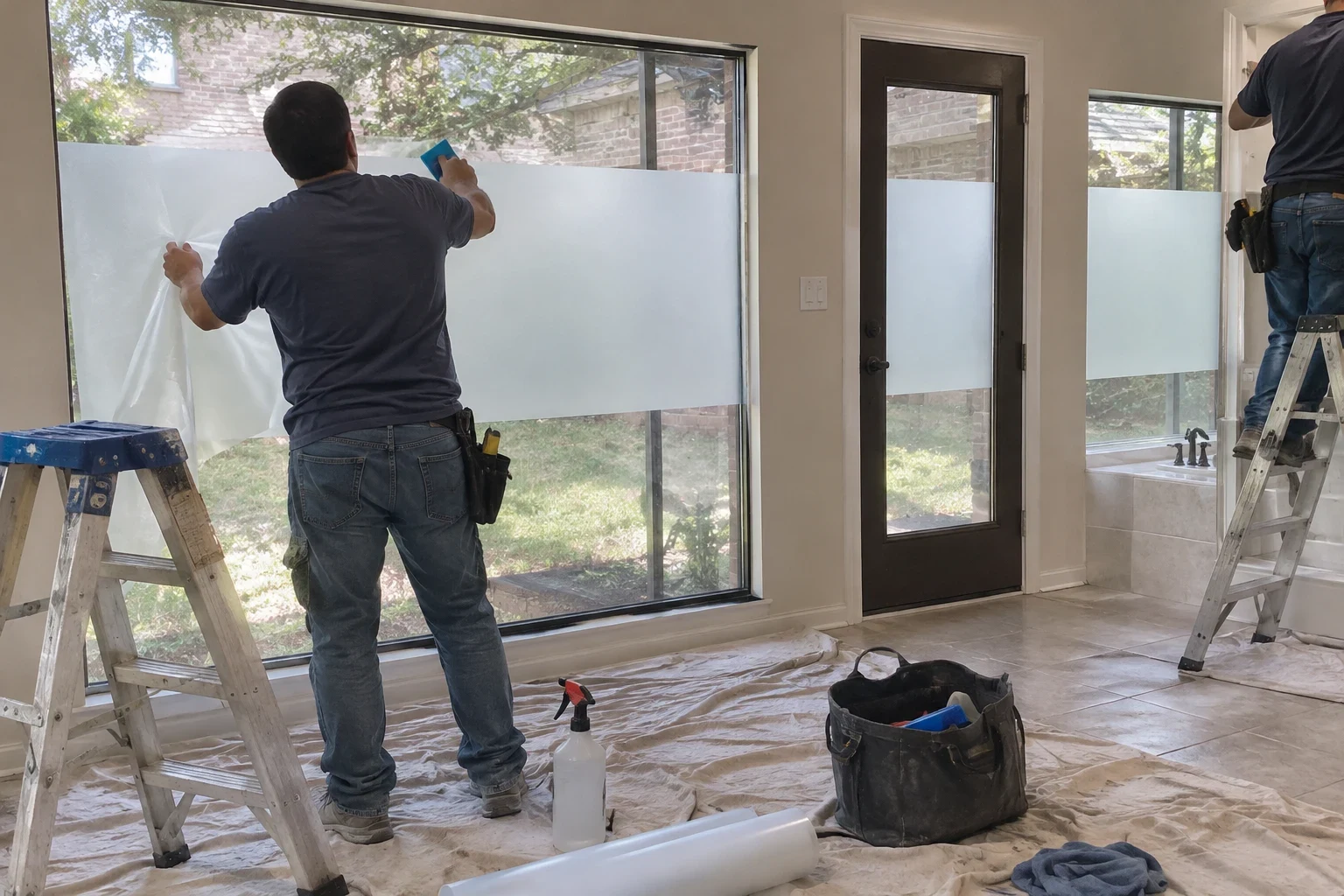
What turf protection film actually does
Modern energy-efficient windows carry a low-E coating that reflects heat back outside. That is great for your electric bill. But double-pane glass can flex slightly inward as air pressure and temperature change, and a curved pane acts like a weak magnifying lens. The reflected beam gets hot enough to warp synthetic turf fibers, ripple vinyl siding, and soften plastic trash cans.
Turf protection window film changes how that glass reflects light. It scatters and reduces the sunlight bouncing off the pane, so the beam that lands on your yard is no longer concentrated. You keep your windows, your view, and most of the light coming into the room.
It is the right call when you can trace damage to a specific window, yours or a neighbor's. If you mainly want a cooler room, our ceramic window film page is a better place to start.
What the job includes
Tracking the reflection
We match the burn marks on your turf or siding to the window producing them. The sun angle shifts through the year, so we look at where the damage sits and how it lines up with the glass.
Choosing the right film
Not every film fixes this problem. We pick one made to cut reflected glare from the treated pane, and we explain how it will look from the street and from inside.
Careful glass prep
Dust, old sealant, and hard-water spots trapped under film become bubbles and lifted edges later. We clean the glass and scrape it so the film bonds flat and stays that way.
Clean edge work
We trim the film to a tight, even gap at the frame. A straight edge with no lifting corners is what keeps moisture and dirt from creeping under and starting a peel.
A final walkthrough
Before we leave, we go over the work with you, explain the short curing period, and tell you how to clean the film without damaging it.
Signs a window is damaging your yard
Melted lines in artificial grass
Narrow streaks or curved patches where fibers look flattened, glossy, or fused together are the classic sign of a focused reflection.
Wavy or warped siding
Vinyl siding that buckles in one spot, often on a house next door, usually points back to a bright window across the way.
Damage that keeps coming back
If you replaced a section of turf and the same spot melted again, the cause is still there. New grass will not fix a reflection problem.
Softened outdoor items
Plastic planters, bins, or patio cushions that sag or discolor in one sunny spot are worth noticing before the turf takes the hit.
A blinding hot spot
You may feel unusual heat or see an intense patch of light on the ground at certain times of day. That patch moves as the sun moves.
How the day goes
- 1
A phone conversation first
You tell us what you are seeing and where. We ask a few questions about the windows and the damage, then set a time to look in person.
- 2
Pinning down the source
We confirm which panes are responsible and measure them. You get a written quote before any work is scheduled, with each window listed.
- 3
Protecting the area and prepping glass
We lay down drop cloths, move what needs moving, and clean every pane thoroughly. Most of the quality in a film job is decided at this step.
- 4
Applying and finishing
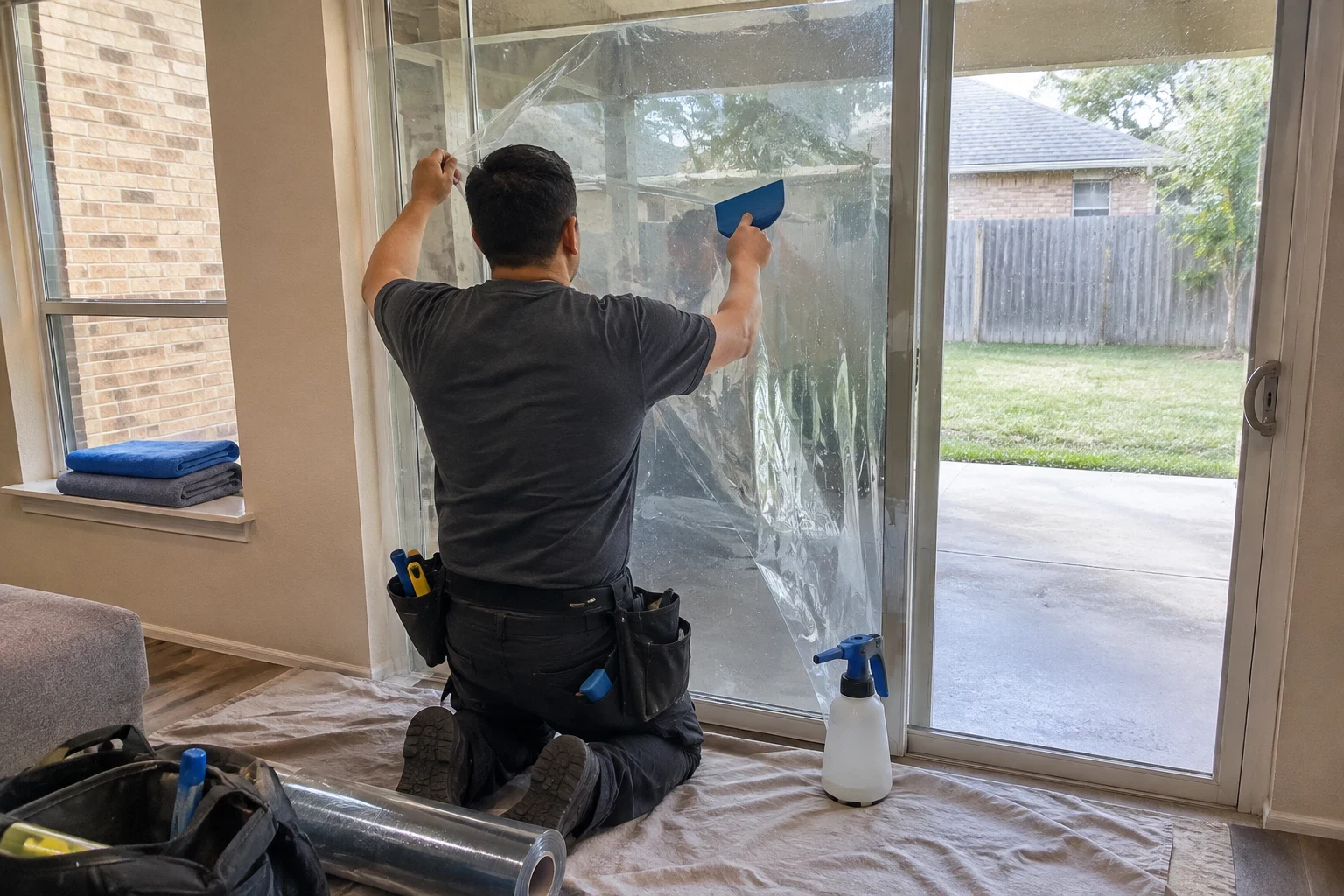
The film goes on, we squeegee out the water and air, and we trim the edges. Then we clean up so the only sign we were there is the film itself.
What affects the price
Most turf protection jobs involve only one or a few windows, which keeps them fairly contained. The final number depends on the glass we treat and how easy it is to reach. Your quote spells out each piece so nothing shows up later as a surprise.
- Number and size of panes
- A single patio door costs less than a row of tall windows. We price by the actual glass area that needs film.
- Height and access
- Second-story windows or panes behind landscaping take ladders, more setup, and more time.
- Film choice
- Films differ in how much they cut reflection and how they look from outside. We will show you options and explain the tradeoffs.
- Condition of the glass
- Heavy mineral buildup, paint overspray, or old film that must come off first adds prep time.
Questions about turf protection film
Something not covered here? (281) 400-5474
The window causing the damage belongs to my neighbor. What can I do?
This happens often, since the reflection usually crosses property lines. The film has to go on the window that reflects the light, so your neighbor would need to agree. We are happy to talk with both of you and explain how the work looks and what it involves.
Will the film make my room darker?
Most turf protection films let plenty of light through, and many people barely notice a difference inside. We will describe the expected change for the film we recommend before you decide.
Is replacing the window a better fix?
Usually not. Replacement is expensive and new low-E glass can create the same reflection. Film targets the actual problem at a fraction of the disruption.
Can my damaged turf be repaired after the film goes on?
We do not repair turf, but once the reflection is controlled, a turf installer can patch the melted sections without worrying they will burn again.
How long does installation take?
Most jobs with a handful of windows are finished in part of a day. The film needs a short curing period after that, and we will tell you when it is safe to clean.
Stop the melting before it spreads
Tell us where the damage is and which windows you suspect. We will come take a look and give you a clear, written quote.